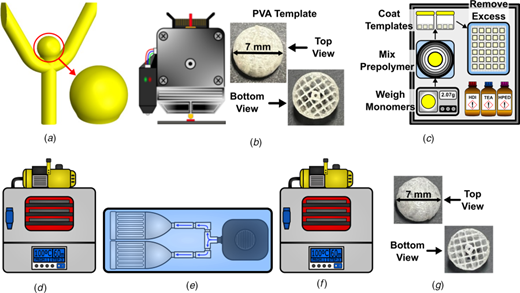
This study evaluates shape memory polymer (SMP) scaffolds designed for patient‑specific endovascular treatment of intracranial aneurysms. Using in‑vitro experiments, the authors characterize how scaffold formulation, porosity, and infill architecture influence key translational metrics, including glass transition behavior, catheter‑compatible compressibility, pulsatile compaction resistance, and shape recovery performance. The results show that SMP scaffolds can be tuned to reliably recover shape, resist physiologic loading, and accommodate clinically relevant catheter sizes, with rectilinear architectures demonstrating the most consistent deployment behavior. These findings establish quantitative benchmarks for optimizing SMP‑based embolic devices and support their potential as customizable, patient‑specific alternatives to current metal‑based aneurysm treatments.